
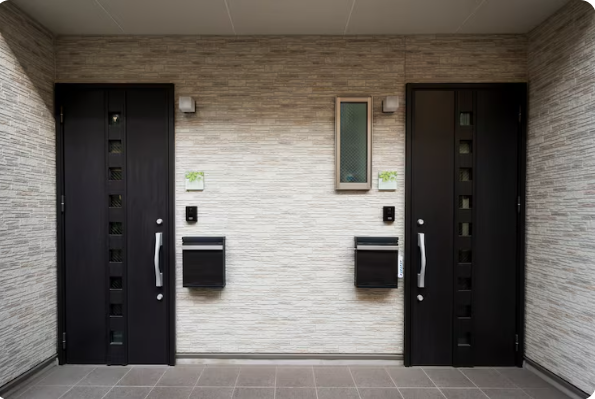
Heavy duty security doors are designed to provide a stronger and more durable barrier than conventional doors. They are commonly used in homes, commercial buildings, warehouses, industrial facilities, offices, and other properties where protection, durability, and controlled access are important.
A heavy duty security door is more than a thick or heavy door. The frame, hinges, locking mechanism, materials, anchoring, and installation all contribute to the overall performance of the door.
What Are Heavy Duty Security Doors?
Heavy duty security doors are reinforced entry systems designed to withstand greater levels of physical stress and everyday wear than standard doors.
Depending on the application, they may incorporate:
- Reinforced steel construction
- Heavy-duty frames
- Commercial-grade hinges
- Multi-point locking systems
- Reinforced lock areas
- Impact-resistant components
- Tamper-resistant hardware
- Corrosion-resistant finishes
- Specialized access-control systems
The appropriate construction depends on the level of security required and the type of property where the door will be installed.
Why Choose Heavy Duty Security Doors?
Increased Protection
A reinforced door can make unauthorized entry more difficult by strengthening the physical barrier between the interior and exterior.
Improved Durability
Heavy duty construction can withstand frequent use and physical stress, making these doors suitable for high-traffic environments.
Better Access Control
Security doors can be combined with advanced locking and access-control systems to regulate who can enter a building or specific area.
Long-Term Performance
Quality materials and appropriate installation can help a security door maintain its performance over many years.
Types of Heavy Duty Security Doors
Heavy Duty Steel Security Doors
Steel is widely used for security applications because of its strength and durability. Steel security doors may be appropriate for commercial buildings, warehouses, industrial facilities, storage areas, and restricted-access spaces.
Commercial Security Doors
Commercial security doors are designed for businesses and facilities with frequent foot traffic. They may include reinforced frames, commercial-grade hardware, panic hardware, access-control systems, and durable finishes.
Industrial Security Doors
Industrial environments can require doors capable of handling demanding operating conditions. These doors may be used in manufacturing facilities, warehouses, distribution centers, equipment rooms, and restricted-access zones.
Residential Heavy Duty Security Doors
Homeowners may use reinforced security doors at exterior entrances, garages, basement entrances, or other areas where additional security is desired.
High-Security Doors
High-security doors are intended for areas where access control and resistance to forced entry are particularly important. They may incorporate specialized locking systems, reinforced frames, access-control technology, and security-rated components.
Important Features of Heavy Duty Security Doors
Strong Door Construction
Steel and other reinforced materials can provide a stronger barrier than conventional residential doors. Thickness, internal construction, reinforcement, and manufacturing methods all influence performance.
Reinforced Door Frames
A strong door installed in a weak frame may not provide the desired level of protection. The frame should be appropriately anchored to the surrounding structure.
Heavy-Duty Hinges
Security doors can be significantly heavier than standard doors. Heavy-duty hinges help support the door and allow smooth operation.
Multi-Point Locking Systems
A multi-point lock can secure the door at multiple locations along the frame rather than relying on a single locking point.
Reinforced Lock Area
The area surrounding the lock is an important part of the door. Reinforcement can help protect the locking mechanism from physical attacks.
Access Control
Commercial and high-security applications may incorporate:
- Keypad entry
- Key cards
- Electronic locks
- Biometric systems
- Intercom systems
- Remote access control
Where Are Heavy Duty Security Doors Used?
Heavy duty security doors can be used in many environments.
Commercial Buildings
Businesses may use reinforced doors for exterior entrances, offices, storage rooms, and restricted areas.
Warehouses
Warehouses often require durable doors because of frequent use, equipment movement, and the need to protect inventory.
Industrial Facilities
Manufacturing facilities may use heavy duty security doors to control access to equipment rooms, production areas, and restricted spaces.
Residential Properties
Homeowners may install reinforced exterior doors when additional protection is desired.
Government and Institutional Facilities
Certain government, educational, healthcare, and institutional environments may require specialized security doors for restricted areas.
Heavy Duty Security Doors for Exterior Applications
Exterior security doors must withstand more than attempted entry. They are also exposed to weather and environmental conditions.
When choosing an exterior security door, consider:
- Corrosion resistance
- Weather seals
- Drainage
- Door finish
- UV exposure
- Temperature changes
- Wind conditions
- Local building requirements
A durable finish can help protect the door from rust and premature deterioration.
Heavy Duty Security Doors and Fire Protection
Security and fire protection are different requirements.
A heavy duty security door should not automatically be considered fire-rated. If a door is required to provide fire resistance, it should have the appropriate testing and certification for the intended application.
Fire-rated doors also need compatible frames, hardware, and installation methods.
Security Door Installation
Installation can be just as important as the door itself.
A properly installed security door should have:
- A securely anchored frame
- Correct hinge installation
- Proper lock alignment
- Appropriate fasteners
- Correct door clearances
- Proper weather sealing where applicable
For commercial and high-security applications, professional installation is generally recommended.
How to Choose the Right Heavy Duty Security Door
Identify the Security Requirement
Start by determining what you want the door to accomplish. Consider whether you need general security, forced-entry resistance, controlled access, high-traffic durability, weather resistance, or a combination of requirements.
Consider the Location
An interior security door has different requirements from an exterior entrance. Industrial, commercial, and residential environments also have different needs.
Evaluate the Frame
Do not focus exclusively on the door panel. Ask about the frame material, construction, anchoring, and compatibility with the building.
Review the Locking System
Consider whether a traditional mechanical lock is sufficient or whether electronic access control would be more appropriate.
Check Testing and Certifications
For applications requiring specific performance levels, look for relevant testing and certification rather than relying only on descriptions such as "high security" or "heavy duty."
Consider Maintenance
Choose a system that can be inspected, serviced, and repaired when necessary.
Maintenance of Heavy Duty Security Doors
Regular maintenance can help keep a security door operating properly.
Inspect the door periodically for:
- Loose hinges
- Damaged locks
- Frame movement
- Corrosion
- Worn weather seals
- Door alignment problems
- Damaged hardware
- Difficulty opening or closing
Electronic access-control components may require additional inspection and maintenance.
Common Mistakes When Buying Security Doors
Focusing Only on Door Thickness
A thicker door does not automatically provide better security. The complete assembly matters.
Ignoring the Frame
A reinforced door mounted in an inadequate frame can create a weak point.
Choosing the Wrong Lock
The locking system should match the security requirements and expected usage.
Overlooking Installation
Poor installation can reduce the effectiveness of even a high-quality door.
Assuming Security Means Fire-Rated
Security performance and fire resistance are separate characteristics. Verify the appropriate certification when fire protection is required.
Frequently Asked Questions About Heavy Duty Security Doors
1. What are heavy duty security doors?
They are reinforced doors designed to provide enhanced durability, security, and resistance to physical stress compared with standard doors.
2. Are steel doors good for security?
Steel is commonly used for security doors because of its strength and durability, although overall performance depends on the complete door system.
3. Are heavy duty security doors suitable for homes?
Yes. Residential versions can provide additional protection while being designed to complement the home's exterior.
4. Can security doors be used for commercial buildings?
Yes. Heavy duty security doors are commonly used in commercial and industrial environments where durability and controlled access are important.
5. Do security doors need special frames?
A reinforced security door should generally be paired with a frame designed to support its weight and security requirements.
6. Can security doors use electronic locks?
Yes. Many commercial security doors can integrate with keypads, card readers, biometric systems, and other access-control technologies.
7. Are heavy duty security doors fire-rated?
Not necessarily. Fire resistance requires specific testing and certification, so buyers should verify the rating separately.
8. Are heavy duty security doors weather-resistant?
Some exterior security doors are designed with weather-resistant materials, finishes, seals, and construction. The specifications should be checked for the intended environment.
9. How long do heavy duty security doors last?
Their service life depends on materials, usage, environmental conditions, installation quality, and maintenance.
10. Are heavy duty security doors expensive?
They generally cost more than standard doors because of reinforced materials, specialized hardware, and stronger frames. The total cost also depends on size, configuration, access control, and installation.
11. Can an existing door be replaced with a heavy duty security door?
In many cases, yes. However, the existing opening and surrounding structure should be evaluated to determine whether modifications are required.
12. What should I look for when buying a heavy duty security door?
Consider door construction, frame strength, hinges, locking system, access control, testing or certification, weather resistance, installation requirements, and maintenance needs.
Conclusion
Heavy duty security doors can provide an important layer of protection for residential, commercial, and industrial properties. Their effectiveness depends not only on the door itself but also on the frame, hinges, locking system, anchoring, hardware, and installation.
When selecting a security door, begin with the specific security and operational requirements of the property. A properly matched and professionally installed door can provide greater durability, controlled access, and enhanced protection while supporting the long-term needs of the building.ChatGPT
Option 2
Heavy Duty Security Doors: Features, Benefits, Types & Buying Guide
Heavy duty security doors are designed to provide a stronger and more durable barrier than conventional doors. They are commonly used in homes, commercial buildings, warehouses, industrial facilities, offices, and other properties where protection, durability, and controlled access are important.
A heavy duty security door is more than a thick or heavy door. The frame, hinges, locking mechanism, materials, anchoring, and installation all contribute to the overall performance of the door.
What Are Heavy Duty Security Doors?
Heavy duty security doors are reinforced entry systems designed to withstand greater levels of physical stress and everyday wear than standard doors.
Depending on the application, they may incorporate:
- Reinforced steel construction
- Heavy-duty frames
- Commercial-grade hinges
- Multi-point locking systems
- Reinforced lock areas
- Impact-resistant components
- Tamper-resistant hardware
- Corrosion-resistant finishes
- Specialized access-control systems
The appropriate construction depends on the level of security required and the type of property where the door will be installed.
Why Choose Heavy Duty Security Doors?
A standard door may be adequate for everyday access, but certain properties require a more robust entry system.
Increased Protection
A reinforced door can make unauthorized entry more difficult by strengthening the physical barrier between the interior and exterior.
Improved Durability
Heavy duty construction can withstand frequent use and physical stress, making these doors suitable for high-traffic environments.
Better Access Control
Security doors can be combined with advanced locking and access-control systems to regulate who can enter a building or specific area.
Long-Term Performance
Quality materials and appropriate installation can help a security door maintain its performance over many years.
Types of Heavy Duty Security Doors
Heavy Duty Steel Security Doors
Steel is widely used for security applications because of its strength and durability. Steel security doors may be appropriate for commercial buildings, warehouses, industrial facilities, storage areas, and secure offices.
Commercial Security Doors
Commercial security doors are designed for businesses and other facilities with frequent foot traffic. They may include reinforced frames, commercial-grade hardware, panic hardware, access-control systems, and durable finishes.
Industrial Security Doors
Industrial environments can require doors capable of handling demanding operating conditions. These doors may be used in manufacturing facilities, warehouses, distribution centers, equipment rooms, and restricted-access areas.
Residential Heavy Duty Security Doors
Homeowners may use reinforced security doors at exterior entrances, garages, basement entrances, or other areas where additional security is desired.
High-Security Doors
High-security doors are intended for areas where access control and resistance to forced entry are particularly important. They may incorporate specialized locking systems, reinforced frames, access-control technology, and security-rated components.
Important Features of Heavy Duty Security Doors
Strong Door Construction
Steel and other reinforced materials can provide a stronger barrier than conventional residential doors. Thickness, internal construction, reinforcement, and manufacturing methods all influence performance.
Reinforced Door Frames
A strong door installed in a weak frame may not provide the desired level of protection. The frame should be appropriately anchored to the surrounding structure.
Heavy-Duty Hinges
Security doors can be significantly heavier than standard doors. Heavy-duty hinges help support the door and allow smooth operation.
Multi-Point Locking Systems
A multi-point lock can secure the door at multiple locations along the frame rather than relying on a single locking point.
Reinforced Lock Area
The area surrounding the lock is an important part of the door. Reinforcement can help protect this area from physical attacks.
Access Control
Commercial and high-security applications may incorporate:
- Keypad entry
- Key cards
- Electronic locks
- Biometric systems
- Intercom systems
- Remote access control
Where Are Heavy Duty Security Doors Used?
Heavy duty security doors can be used in many environments.
Commercial Buildings
Businesses may use reinforced doors for exterior entrances, offices, storage rooms, and restricted areas.
Warehouses
Warehouses often require durable doors because of frequent use, equipment movement, and the need to protect inventory.
Industrial Facilities
Manufacturing facilities may use heavy duty security doors to control access to equipment rooms, production areas, and restricted spaces.
Residential Properties
Homeowners may install reinforced exterior doors when additional protection is desired.
Government and Institutional Facilities
Certain government, educational, healthcare, and institutional environments may require specialized security doors for restricted areas.
Heavy Duty Security Doors for Exterior Applications
Exterior security doors must withstand more than attempted entry. They are also exposed to weather and environmental conditions.
When choosing an exterior security door, consider:
- Corrosion resistance
- Weather seals
- Drainage
- Door finish
- UV exposure
- Temperature changes
- Wind conditions
- Local building requirements
A durable finish can help protect the door from rust and premature deterioration.
Heavy Duty Security Doors and Fire Protection
Security and fire protection are different requirements.
A heavy duty security door should not automatically be considered fire-rated. If a door is required to provide fire resistance, it should have the appropriate testing and certification for the intended application.
Fire-rated doors also need compatible frames, hardware, and installation methods.
Security Door Installation
Installation can be just as important as the door itself.
A properly installed security door should have:
- A securely anchored frame
- Correct hinge installation
- Proper lock alignment
- Appropriate fasteners
- Correct door clearances
- Proper weather sealing where applicable
For commercial and high-security applications, professional installation is generally recommended.
How to Choose the Right Heavy Duty Security Door
Identify the Security Requirement
Start by determining what you want the door to accomplish. Consider whether you need general security, forced-entry resistance, controlled access, high-traffic durability, weather resistance, or a combination of requirements.
Consider the Location
An interior security door has different requirements from an exterior entrance. Industrial, commercial, and residential environments also have different needs.
Evaluate the Frame
Do not focus exclusively on the door panel. Ask about the frame material, construction, anchoring, and compatibility with the building.
Review the Locking System
Consider whether a traditional mechanical lock is sufficient or whether electronic access control would be more appropriate.
Check Testing and Certifications
For applications requiring specific performance levels, look for relevant testing and certification rather than relying only on general descriptions such as "high security" or "heavy duty."
Consider Maintenance
Choose a system that can be inspected, serviced, and repaired when necessary.
Maintenance of Heavy Duty Security Doors
Regular maintenance can help keep a security door operating properly.
Inspect the door periodically for:
- Loose hinges
- Damaged locks
- Frame movement
- Corrosion
- Worn weather seals
- Door alignment problems
- Damaged hardware
- Difficulty opening or closing
Electronic access-control components may require additional inspection and maintenance.
Common Mistakes When Buying Security Doors
Focusing Only on Door Thickness
A thicker door does not automatically provide better security. The complete assembly matters.
Ignoring the Frame
A reinforced door mounted in an inadequate frame can create a weak point.
Choosing the Wrong Lock
The locking system should match the security requirements and expected usage.
Overlooking Installation
Poor installation can reduce the effectiveness of even a high-quality door.
Assuming Security Means Fire-Rated
Security performance and fire resistance are separate characteristics. Verify the appropriate certification when fire protection is required.
Frequently Asked Questions About Heavy Duty Security Doors
1. What are heavy duty security doors?
They are reinforced doors designed to provide enhanced durability, security, and resistance to physical stress compared with standard doors.
2. Are steel doors good for security?
Steel is commonly used for security doors because of its strength and durability, although overall performance depends on the complete door system.
3. Are heavy duty security doors suitable for homes?
Yes. Residential versions can provide additional protection while being designed to complement the home's exterior.
4. Can security doors be used for commercial buildings?
Yes. Heavy duty security doors are commonly used in commercial and industrial environments where durability and controlled access are important.
5. Do security doors need special frames?
A reinforced security door should generally be paired with a frame designed to support its weight and security requirements.
6. Can security doors use electronic locks?
Yes. Many commercial security doors can integrate with keypads, card readers, biometric systems, and other access-control technologies.
7. Are heavy duty security doors fire-rated?
Not necessarily. Fire resistance requires specific testing and certification, so buyers should verify the rating separately.
8. Are heavy duty security doors weather-resistant?
Some exterior security doors are designed with weather-resistant materials, finishes, seals, and construction. The specifications should be checked for the intended environment.
9. How long do heavy duty security doors last?
Their service life depends on materials, usage, environmental conditions, installation quality, and maintenance.
10. Are heavy duty security doors expensive?
They generally cost more than standard doors because of reinforced materials, specialized hardware, stronger frames, and installation requirements.
11. Can an existing door be replaced with a heavy duty security door?
In many cases, yes. However, the existing opening and surrounding structure should be evaluated to determine whether modifications are required.
12. What should I look for when buying a heavy duty security door?
Consider door construction, frame strength, hinges, locking system, access control, testing or certification, weather resistance, installation requirements, and maintenance needs.
Conclusion
Heavy duty security doors can provide an important layer of protection for residential, commercial, and industrial properties. Their effectiveness depends not only on the door itself but also on the frame, hinges, locking system, anchoring, hardware, and installation.
When selecting a security door, start with the specific security and operational requirements of the property. A properly matched and professionally installed door can provide greater durability, controlled access, and enhanced protection while supporting the long-term needs of the building.